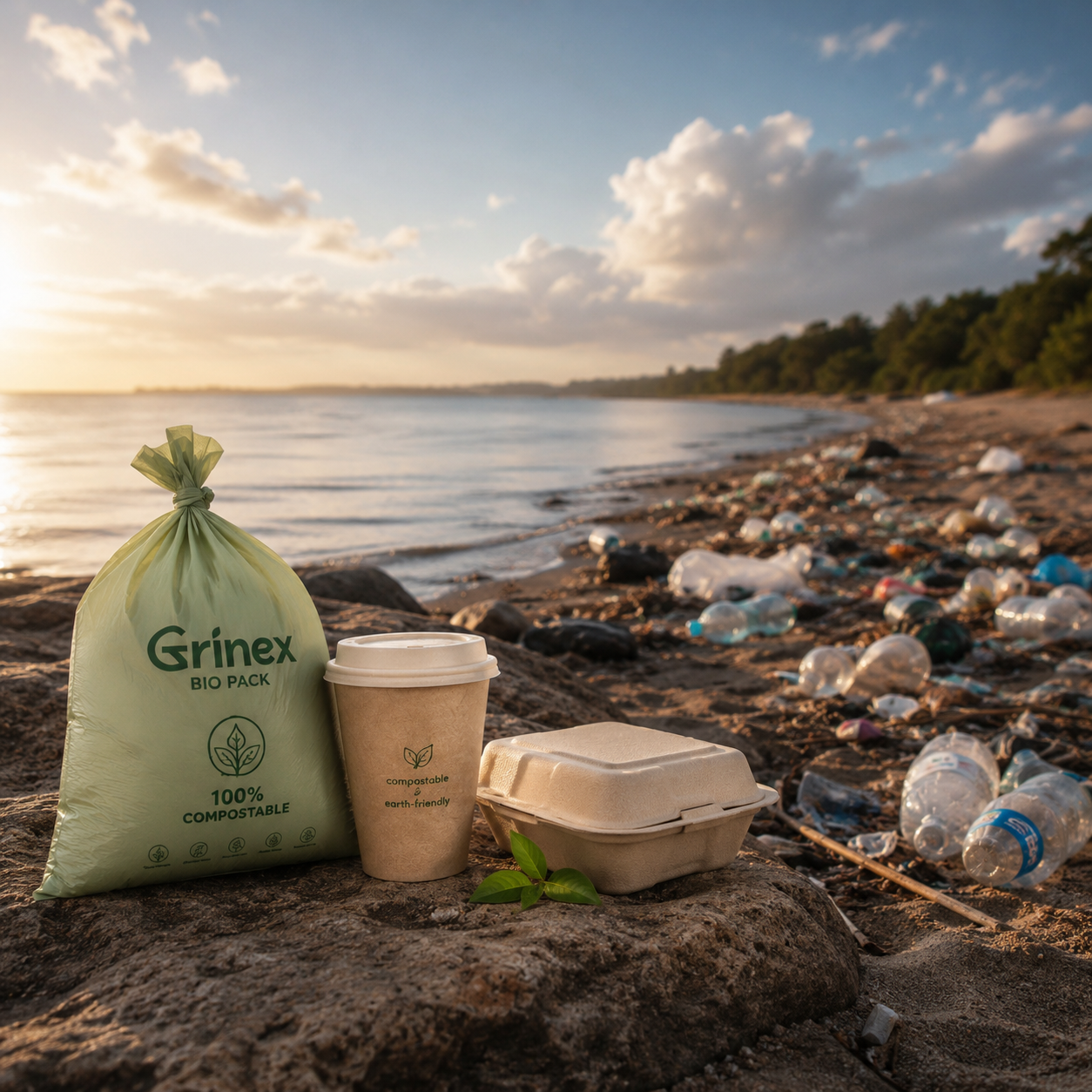
On 1st July 2022, India quietly did something most countries are still debating. The Ministry of Environment, Forest and Climate Change announced a nationwide ban on identified single-use plastic items, the cutlery, straws, films, and disposables that had become invisible furniture in every Indian business. Four years later, the rule is still in force. The enforcement has tightened. The list has expanded. And yet, walk into a tea stall, a small hotel, a clinic, or a delivery kitchen anywhere in India, and you will still find the banned items quietly in use.
This isn’t because Indian businesses don’t care. It’s because the rule is genuinely confusing, the alternatives are unevenly distributed, and the enforcement, until recently, has been patchy enough to make non-compliance feel like a small, acceptable risk.
That window is closing. State Pollution Control Boards have begun issuing notices. Municipal raids have picked up in metros and Tier-2 cities. Major delivery platforms now require their partner kitchens and stores to provide written compliance declarations. And new categories of single-use items, long ignored, are being added to the banned list each year.
So this is a piece for every founder, procurement head, hotel manager, hospital administrator, and small business owner who has been treating the ban as a problem they’ll handle “later.” Later has arrived. Here’s what you need to know.
What’s actually banned?
The 2022 rule didn’t ban all plastic. It banned a specific category: single-use plastic items that are difficult to collect, have low utility, and high littering potential. The original list included nineteen items. Subsequent expansions have added more. If your business uses any of these, you are operating in violation of national law, regardless of how routine the usage feels.
What you can no longer use:
- Plastic cutlery — Use compostable
- Plastic plates, cups, glasses — Use compostable
- Plastic straws & stirrers — Use compostable
- Earbuds with plastic sticks — Switch material
- Plastic flags, balloons, candy sticks — Switch material
- Polystyrene (thermocol) decorations — Switch material
- Plastic wrapping around invitation cards, cigarette packs — Use compostable
- PVC banners less than 100 microns — Switch material
- Carry bags below 120 microns — Use compostable
The list is not the full picture, though. The deeper rule is that plastic carry bags below 120 microns are banned outright, while thicker bags are increasingly being phased out in many states. Plastic packaging continues to be regulated under the parallel Extended Producer Responsibility (EPR) framework, which makes producers responsible for the lifecycle of the plastic they put into the market.
In other words, the line is not just about which specific items are banned. The direction of regulation is unmistakable: plastic is being squeezed out of Indian commerce, one category at a time.
What it actually costs you to ignore it?
The penalties under the Environment Protection Act are not small. They are layered. They escalate. And they target not just the manufacturer but the user, distributor, and retailer.
Monetary fines: Fines under the Environment Protection Act range from ₹500 for petty offences to lakhs of rupees for repeat or commercial violations. Some states have added their own enhanced penalties on top.
Seizure & closure: Pollution Control Boards have the authority to seize banned inventory and, in repeat cases, recommend temporary closure of the establishment. For restaurants, kitchens, and retail outlets, even a short closure is brand-damaging.
Platform de-listing: Delivery platforms and major retailers are increasingly making compliance a contractual requirement. Non-compliance can mean being de-listed, suspended, or removed from preferred-partner status.
None of this is theoretical. Pollution Control Boards across major states have stepped up enforcement drives since 2024, issuing thousands of show-cause notices to restaurants, hotels, clinics, retailers, and small manufacturers. The era of quiet non-compliance is winding down.
Why are most businesses still stuck?
If the law is clear and the penalties are real, why hasn’t the switch fully happened? In our conversations with hotels, hospitals, retailers, and food businesses across India, the same three reasons come up.
The first: confusion about what counts as compliant. Most businesses don’t have time to parse the difference between “biodegradable” and “compostable” or to verify a supplier’s CPCB certification. When a vendor walks in with a stack of bags labelled “eco-friendly,” it’s easier to accept it than to interrogate it. And when the inspector eventually walks in, that good faith doesn’t always protect you.
The second: inconsistent supply. For years, compostable alternatives were either unavailable in the volumes businesses needed, or available only at prices that didn’t make operational sense. That gap has closed dramatically. Certified compostable carry bags, garbage bags, cutlery, and packaging are now available at predictable supply and competitive pricing — but many businesses haven’t updated their procurement habits.
The third: fear of operational disruption. Procurement teams worry that switching means changing dozens of SKUs, retraining staff, reorganising waste streams, and explaining the new costs to leadership. In practice, the switch is far simpler than the inertia suggests. Most businesses can transition their plastic-banned categories within 60–90 days with the right supplier partnership.
60–90 days: is roughly the time most small and mid-sized businesses need to fully transition out of banned single-use plastic, with the right supplier supporting them through the change.
The opportunity hiding in the switch.
Here’s what most businesses miss when they think about the ban. Compliance is the floor, not the ceiling. The businesses that switched early didn’t just escape penalties, they discovered a marketing story worth telling. They started featuring “100% compostable” badges in their stores, on their menus, in their delivery boxes. They turned a regulatory requirement into a brand differentiator.
India’s eco-conscious consumer base is growing year-on-year. Hotel guests notice the materials they touch. Hospital patients notice what waste they generate. Delivery customers absolutely notice the courier bag they tear open. The cost of switching to compostable is real but modest. The cost of not switching is increasingly: invisibility in a market that is starting to look for the brands that did.
How Grinex helps you make the switch?
Grinex was built specifically for the businesses caught in this transition, the hotels, hospitals, supermarkets, delivery platforms, retail chains, and small operators who need to switch but don’t have the bandwidth to figure out what compostable really means, which supplier to trust, and how to document the change.
Every Grinex product is CPCB-certified and CIPET-tested. Every product comes with the documentation your auditor and your customers will eventually ask for. We help businesses run a proper plastic audit, identify the categories that need urgent replacement, supply the compostable alternatives in the volumes you actually need, and walk you through the operational shift, including staff training and waste segregation guidance.
The ban is not going away. The enforcement is not slowing down. The question for every business right now is not whether to switch, but how quickly, and whether you’ll do it on your terms or theirs.
Five things every business needs to know:
- The 2022 ban is still in force. It covers nineteen+ single-use plastic categories and is being expanded each year.
- Enforcement has sharply increased since 2024. Pollution Control Boards across states are issuing notices, conducting raids, and levying penalties.
- Penalties are not just monetary. They include seizure, closure, and increasingly, de-listing from delivery and retail platforms.
- “Biodegradable” is not a defence. Compliance requires CPCB-certified compostable products. Get the paperwork in writing.
- Switching is faster than waiting. Most businesses complete the transition in 60–90 days with the right supplier and a basic plastic audit.